Serving Bolingbrook
Water Damage from Firefighting in Bolingbrook
Call us for a free water damage from firefighting estimate
Serving Bolingbrook
Call us for a free water damage from firefighting estimate
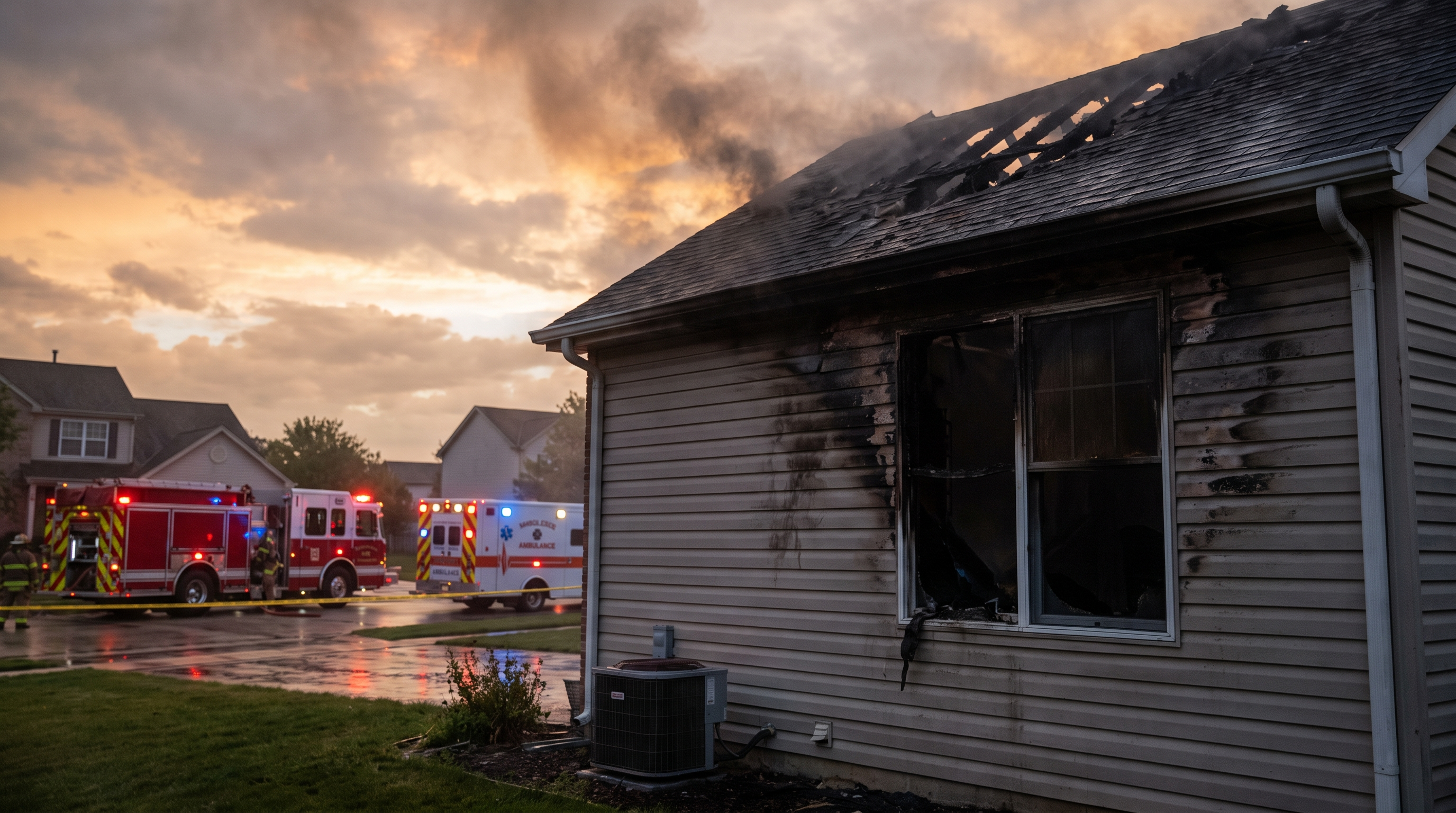
Fire crews may use hundreds or thousands of gallons of water during a residential fire. After the flames are out, that water can soak drywall, insulation, base plates, subflooring, hardwood, cabinet boxes, carpet, stored belongings, and finished basement materials.
Naperville homes need careful moisture mapping because water can move into places that do not look wet. In older colonials, water may run through wall cavities and ceiling assemblies. In newer suburban homes, it can collect behind cabinets, under floating floors, around utility rooms, and along trim lines.
Firefighting water damage has a short clock. Wet gypsum board loses strength, wood swells, laminate cups, cabinet boxes delaminate, and hidden moisture can lead to mold if drying waits.
Mitigation must work with the fire claim, not against it. Contractors should document the wet materials before removal, preserve evidence for the adjuster, then extract water, remove unsalvageable materials, and set drying equipment where it will do real work.
Bolingbrook has many homes from the region's suburban growth decades, with attached garages, utility rooms, open kitchens, and gas furnace systems that can shape how smoke spreads. Winter heating incidents and electrical failures can affect rooms far from the origin because smoke follows air movement through returns, chases, and stair openings.
Suppression water can also move out of sight. It may run under laminate flooring, soak cabinet bases, collect along trim, or drip into lower-level finishes. A room can look cleaned up while moisture remains behind materials.
Naperville Fire Damage Restoration helps Bolingbrook homeowners connect with licensed restoration contractors for emergency protection, assessment, smoke and soot cleanup, drying, contents inventory, odor treatment, and adjuster coordination.
Removing wet materials too soon can hurt the claim, but waiting too long can create mold. The right contractor documents first, then dries or removes materials with the insurance record in mind.
Water follows framing, flooring edges, cabinet bases, basement paths, and utility penetrations. Naperville homes often need readings in rooms that did not burn.
Start drying after clearance so suppression water does not turn into a second loss.
Free — no obligations