Naperville's Odor Elimination Specialists
Remove Smoke Odor at the Source
Sprays mask the smell; lasting odor removal starts with residue cleanup and source treatment.
Naperville's Odor Elimination Specialists
Sprays mask the smell; lasting odor removal starts with residue cleanup and source treatment.
A fire-damaged home can look clean and still smell burned. Smoke odor can stay in drywall paper, insulation, ductwork, carpet backing, furniture, cabinets, attic spaces, closets, and stored contents long after visible soot is gone.
Odor elimination starts with source removal, not fragrance. Contractors need to remove charred materials, clean soot residue, treat contents, inspect HVAC pathways, and identify surfaces that need sealing or replacement before deodorization can hold.
Naperville furnace fires and electrical fires can create stubborn synthetic odors because plastics, wire insulation, dust, and building materials burn together. Kitchen fires can leave protein residue that looks light but smells heavy. Both require more than a quick air scrubber.
Depending on the source, odor treatment may include HEPA filtration, hydroxyl generators, ozone in unoccupied spaces, thermal fogging, duct cleaning, or encapsulation of prepared structural materials.
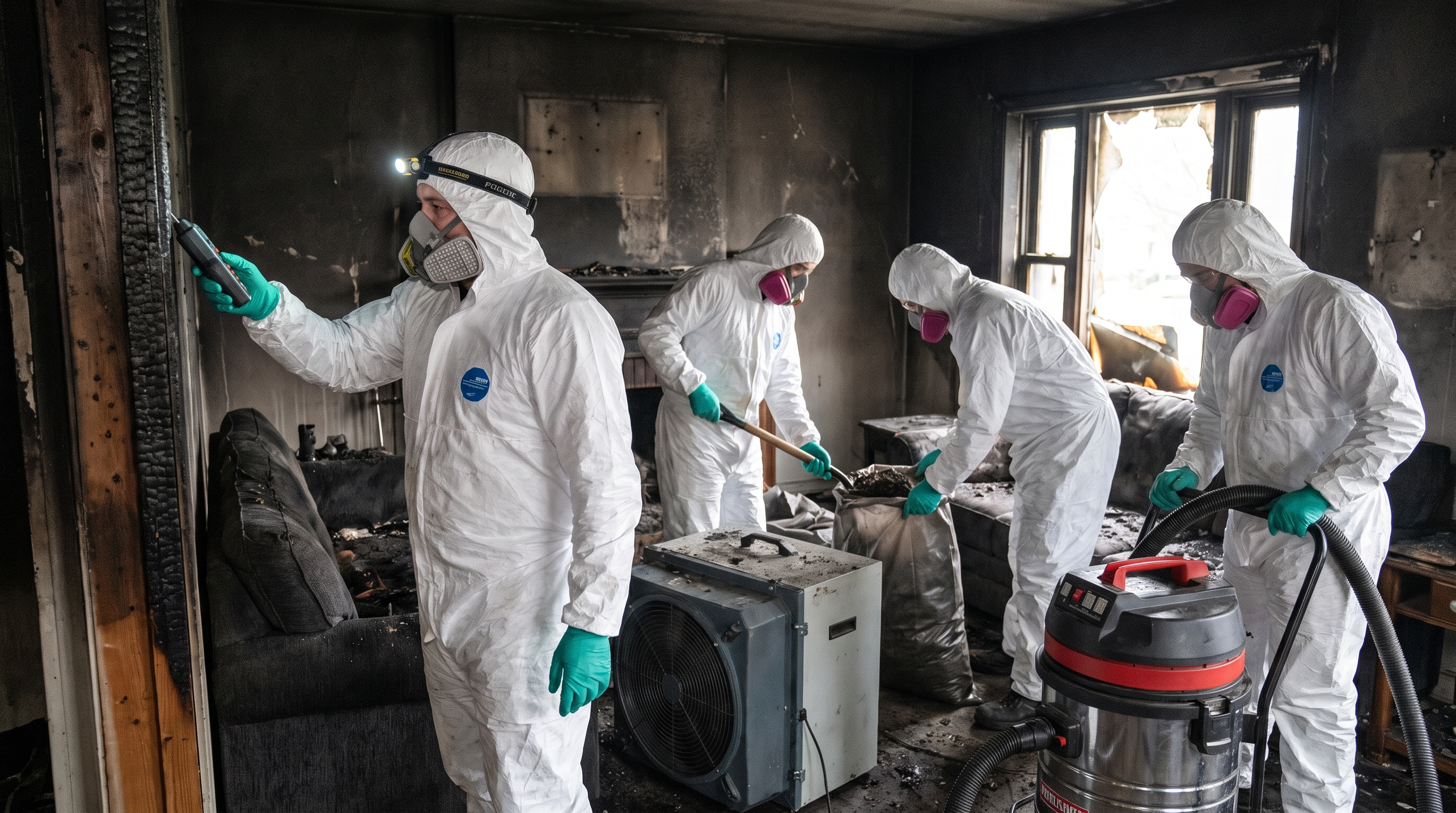
Odor work succeeds when contractors find the smoke source, clean the residue, and choose treatment based on the materials affected.
Technicians trace odor to charred materials, soot residue, HVAC pathways, insulation, contents, or hidden cavities. Finding the source prevents odor from returning after treatment.
Treatment may include HEPA filtration, hydroxyl generators, ozone in controlled unoccupied conditions, thermal fogging, and other methods based on the fire source and occupancy needs.
When smoke has penetrated structural materials that cannot be cleaned, contractors may seal prepared surfaces. Encapsulation helps prevent trapped odor from releasing back into the home.
Deodorization should follow debris removal, soot cleaning, contents handling, and HVAC review. That sequence treats the cause instead of covering the symptom.
Some odor treatments require the home to be unoccupied, while others can run during parts of restoration. The contractor selects methods based on residue type, contents, and building conditions.

Schedule odor evaluation before smoke settles deeper into porous materials.
Free — no obligations
Locate smoke-contaminated materials, HVAC paths, attic spaces, contents, and cavities contributing to odor.
Remove unsalvageable burned material and clean soot residue before deodorization begins.
Choose hydroxyl, ozone, thermal fogging, filtration, sealing, or combined methods based on the fire and occupancy conditions.
Recheck treated areas after cleaning and drying so lingering odor sources can be addressed before final inspection.