Serving Wheaton
Board-Up & Tarping in Wheaton
Call us for a free board-up & tarping estimate
Serving Wheaton
Call us for a free board-up & tarping estimate
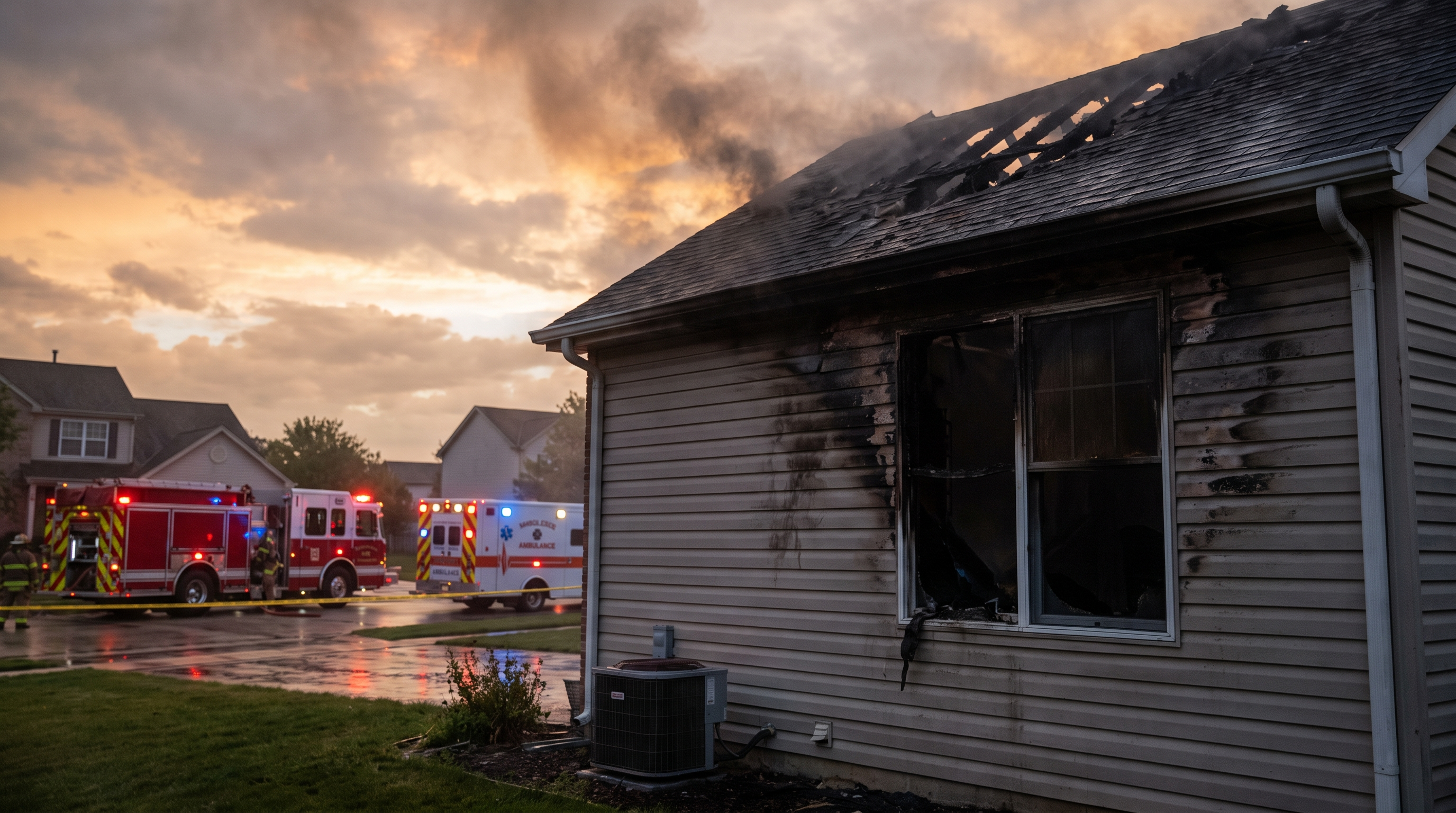
A residential fire can leave a Naperville home exposed through broken windows, burned doors, roof cuts, damaged siding, compromised garage openings, and holes made during firefighting. Those openings need temporary protection before weather or unauthorized entry adds to the loss.
Board-up and tarping are often treated as emergency services because they prevent further damage. Homeowners should not wait for the adjuster before taking reasonable steps to protect the property after it is safe to access.
DuPage County weather can change fast during winter and spring. A roof opening or broken window can turn a fire claim into a water intrusion problem if snow, rain, or wind reaches the interior.
The work should be documented with photos and notes. That record shows the carrier what was exposed, what got protected, and why temporary stabilization was needed before the full restoration plan.
Wheaton has many established homes with older framing, remodel history, finished basements, and electrical systems that may predate modern panels. After a fire, those details matter. Smoke can move through old wall cavities, attic paths, and floor openings, while water from suppression can affect plaster, trim, hardwood, and lower-level finishes.
Kitchen fires, furnace incidents, and electrical problems often leave more damage than the visible burn marks suggest. Soot can settle on cabinet faces, lighting, vents, and textiles. Odor can stay in insulation, ducts, and soft contents if cleanup focuses on the room where flames appeared.
Naperville Fire Damage Restoration helps Wheaton property owners connect with licensed contractors for emergency stabilization, assessment, smoke and soot cleanup, drying, contents pack-out, odor treatment, rebuild coordination, and insurance documentation.
Naperville weather can expose a burned home to rain, snow, freeze-thaw movement, and wind-driven moisture. Securing openings right away keeps the loss from growing.
Emergency protection is paired with documentation so the homeowner can show the carrier what was exposed, why it was secured, and how the work prevented further damage.
Request emergency protection after the property is cleared for access.
Free — no obligations